The comparison
A dinner-show night or a day at Carthage and Sidi Bou Said?
Hammamet's Sheherazade evening set beside an eight-hour excursion to Carthage, Sidi Bou Said and the Tunis medina: what each gives you and how to choose.
Find my evening ↗Quick answer
They are different kinds of day, and the decision comes down to what you want from Tunisia. The dinner show is a four-hour social evening with transfers from listed hotels and a 3.8 score from about 72 reviews. The Carthage excursion is an eight-hour sightseeing day with lunch, scoring 4.3 from about 1,800 reviews. If you can give up one slot of your holiday for history, the day trip is the stronger plan on the evidence; if you want an easy night out, the show wins on effort.
Evening show against a day of ruins and white lanes
| Sheherazade dinner show | Carthage, Sidi Bou Said and Tunis medina | |
|---|---|---|
| What it is | Tunisian food and a live performance in an arabesque setting | A day tour of three sites with lunch |
| Length | Four hours | Eight hours |
| Score | 3.8 from about 72 reviews | 4.3 from about 1,800 reviews |
| Time of day | Evening | Daytime |
| Effort | Seated, with transfers from listed hotels | Walking and touring, so comfortable shoes matter |
| What you take home | A themed night and a first taste of Tunisian food and music | Ancient Carthage, a blue-and-white hill village and a walled medina's souks |
| Heritage | A staged evening for visitors | Carthage and the Medina of Tunis are both on UNESCO's World Heritage List, inscribed in 1979 |
| Best for | Groups wanting a social night with little planning | Curious travellers who want Tunisia's history at the source |
Not rivals, but you may have to choose
A package holiday has only so many free days, and both plans want one of them. The dinner show takes the evening and leaves your day untouched. The Carthage excursion takes most of a day and leaves your evening, if you are not too tired. If you have a week or more in Hammamet, doing both is entirely possible; if you have three nights, you will be choosing. The sections below set out what each one asks of you so the choice is easier.
What the dinner show offers
The booking page describes a night of traditional Tunisian food and entertainment, with a meze starter, a live performance in an arabesque setting and transfers from listed hotels, over about four hours. The score is 3.8 from about 72 reviews. Reviewers mention more activities than just the show and the dancing. It is a hosted, social evening rather than a place you explore for yourself, and the organiser decides the pace.
What the Carthage day offers
The listing for the day trip promises the three most visited sites in Tunisia in one day: imperial Carthage, the white-and-blue village of Sidi Bou Said and the Medina of Tunis, with lunch, over about eight hours. It scores 4.3 from about 1,800 reviews. That is a far larger and stronger crowd of opinion than the dinner show's, and it is worth saying plainly that a bigger sample is a firmer signal. Neither listing states a pickup arrangement in the lines this guide relies on, so check the day trip's meeting point on its own page.
Carthage: what you actually see
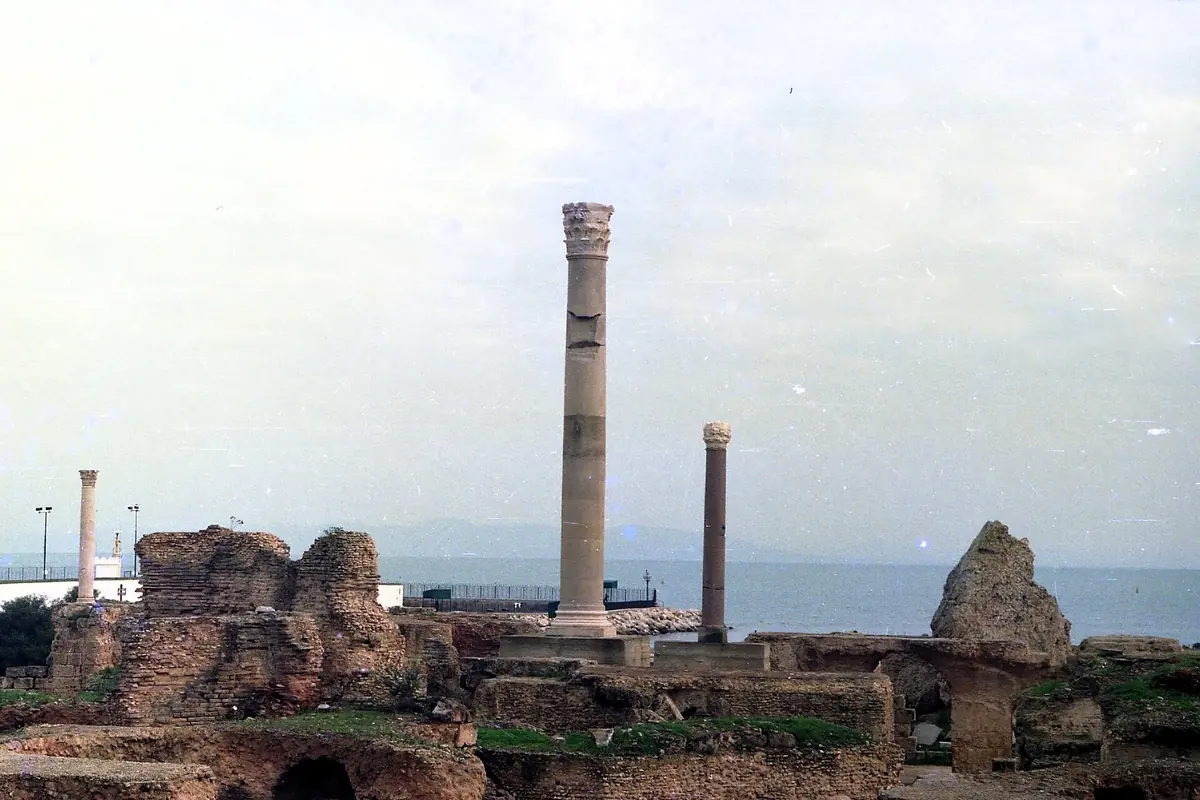
Wikipedia places Carthage about 15 kilometres east-north-east of Tunis, on the eastern side of the Lake of Tunis. Tradition credits its founding to the Phoenician queen Dido, though her historicity is questioned. Rome destroyed the Punic city in 146 BC after a siege of nearly three years, and Julius Caesar rebuilt it between 49 and 44 BC. The Baths of Antoninus are among the standing monuments, and UNESCO designated the site in 1979. Much of what is visible is Roman rather than Punic, which surprises some visitors.
Sidi Bou Said: the blue-and-white village
Wikipedia puts Sidi Bou Said about 20 kilometres north-east of Tunis, reached by the TGM train, and names it for Abu Said al-Baji, with a sanctuary established there in the 12th or 13th century. Wealthy residents of the Beylik of Tunis built homes there in the 18th century, and in the 1920s Rodolphe d'Erlanger helped popularise the blue-and-white colour scheme; his former home, Ennejma Ezzahra, is now a museum. Cafés and galleries line the lanes, and the village is as much a place to wander and look at the sea as a list of monuments.
The Medina of Tunis
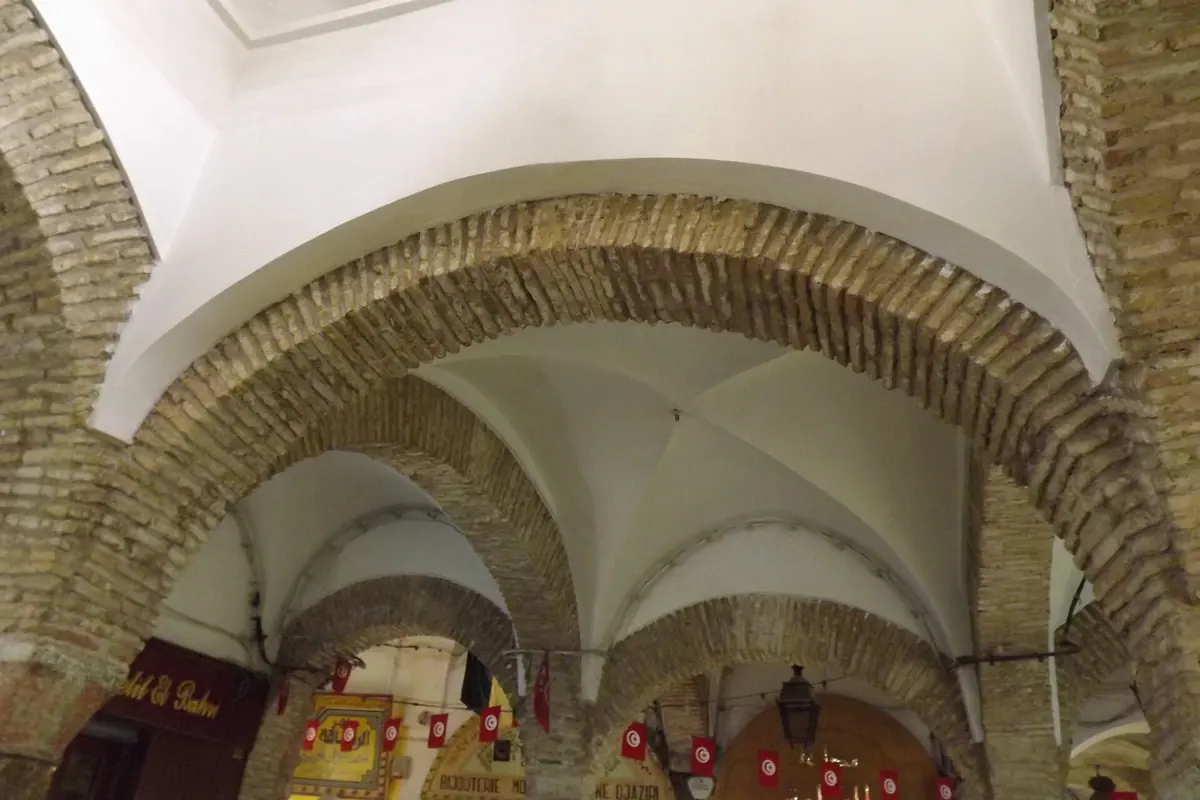
The third stop is the old city of Tunis. Wikipedia says it was founded in 698 around the Zitouna Mosque and holds some 700 monuments, including palaces, mosques, mausoleums, madrasas and fountains. It was inscribed by UNESCO in 1979 and extended in 2010. Under the Hafsids the medina took on the essential form we know now. Its main axis runs from the mosque towards the kasbah, and souks line the way. Hammamet's own medina, by contrast, is small, coastal and built for a town of fishermen and merchants.
Food on each plan
Both plans feed you, in very different ways. The dinner show lists a meze starter and Tunisian food without naming dishes. The day trip lists lunch, and the listing's web address calls it a Tunisian lunch, but again no menu is given. In neither case should you expect a particular dish. If food is the main reason you are weighing them up, note that a relaxed lunch in a medina café, which you can arrange yourself, lets you choose what you eat, which neither package does.
What the two review pools tell you
Review counts matter as much as scores. A 4.3 from about 1,800 people is a stable verdict; a 3.8 from about 72 can move a long way with a handful of new reviews. That does not make the dinner show bad, only less proven. If you decide to book it, read the newest comments and weigh them against your own tolerance for a long, busy evening. For the day trip, the useful reading is about group size, the pace of the day and the quality of the guiding.
Pace and effort
Eight hours of sightseeing is a physical day: walking over uneven Roman stone, climbing a hill village and moving through crowded souks. Wear closed, comfortable shoes and carry water. The dinner show asks the opposite: you sit, you are carried there and back, and the work is done by others. Should someone in your party find walking hard or tire in the heat, the show is the kinder option; the day trip rewards people who like to keep moving.
Value for the heritage-minded
For a traveller who wants history, the day trip is the clear winner. Two of its three sites are on the UNESCO list, and the Roman and Punic remains at Carthage reach back more than two thousand years. The dinner show is a staged evening for visitors; it can introduce Tunisian food and music, but it is not a heritage site and does not claim to be. If the main reason you came to Hammamet was the beach, the show is the lighter and more convenient way to meet the country.
Combining them in one trip
On a week-long stay, a common shape is to take the day trip first, when you have energy, then reserve the show for a later evening when you want to relax. Avoid putting them on consecutive days if you can, because an eight-hour excursion followed by a four-hour night will blur both. Leave a gap, check the transfer list for the dinner show and read your confirmations, which hold the times this guide does not print.
Who this isn't for
Not a match for anyone who dislikes long days out, crowds or walking. The dinner show disappoints travellers who want a short evening or a refined meal. If you prefer something between the two, the other Hammamet plans on this site include a half-day through Hammamet's medina and the Nabeul spice souk and a catamaran cruise, both rated 4.3 or above.
The decision in one line
Pick the day trip if history is why you travel and you have a spare day; choose the evening if you are after a night out where transport is handled and you accept a mixed score; pick both if the calendar allows. Whichever you choose, book on GetYourGuide, check the details on the booking page and keep your confirmation handy.
Read next: Is the Sheherazade dinner show in Hammamet worth it?
Frequently asked questions
Which is better, the dinner show or the Carthage day?
They suit different travellers. The day trip scores higher (4.3 from about 1,800 reviews) and covers heritage sites; the show scores 3.8 from about 72 reviews and is an easy social evening.
How long is the Carthage day trip?
The listing runs about eight hours and includes lunch.
Could I fit both into one stay?
Yes, as separate bookings. Leave a gap between them rather than stacking them on consecutive days.
Is Carthage a World Heritage Site?
Yes. Wikipedia says it was designated in 1979, the same year as the Medina of Tunis.
Sources