Music
Malouf, mezwed and the sound of a Tunisian evening
The Andalusian suites, the bagpipe-and-drum party music and the drum rituals that make up Tunisia's traditions, so the names mean something if you hear them.
Find my evening ↗Quick answer
Tunisian music is several traditions, not one. Ma'luf is the classical, Andalusian-rooted suite; mezwed is the popular music of weddings and parties, built around a bagpipe and a drum; stambali is a ritual tradition that belongs to its own community. The booking page for the Hammamet dinner show names none of them, so treat this as background rather than a programme.
Three names you may meet
| Tradition | What it is | Where you hear it |
|---|---|---|
| Ma'luf | A classical style built on the Andalusian nuba suite | Concerts and heritage settings |
| Mezwed | Popular music with a bagpipe and the darbouka drum | Weddings, parties and street celebrations |
| Stambali | A music-based healing and possession rite | Ceremonies, not entertainment |
Why the names matter
A visitor who has booked a dinner show knows only that the evening includes a live performance in an arabesque setting. The words on a menu board or a host's microphone may still be useful: ma'luf, mezwed, darbouka. Knowing what they mean turns a pleasant noise into something you can place. The facts below come from Wikipedia's article on the music of Tunisia and its linked articles, quoted loosely and without any claim about what the organiser plays.
Ma'luf: the Andalusian inheritance
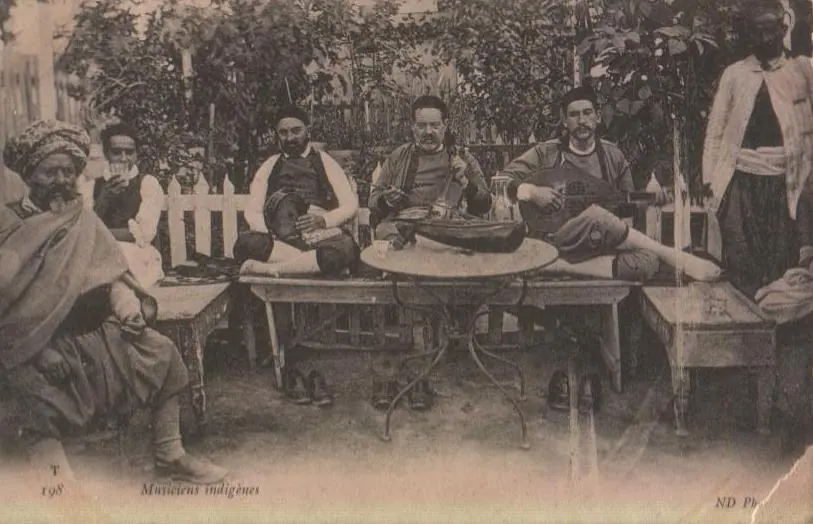
Wikipedia describes ma'luf as an emblem of Tunisian national identity. Its main structural element is the Andalusi nuba, a two-part suite in a single maqam lasting about an hour, and its lyrics draw on the qasidah. The page says the style was brought from Andalusia after the Moorish expulsion in the 15th century, with earlier roots traced to Ziryab, who settled in Kairouan and then Cordoba. A small orchestra of violins, percussion, a qanun and flutes plays it, and the Tunisian oud is a close relative of the ouds of Algeria and Morocco.
How ma'luf was revived
The same article says Ottoman influence and the Bey Muhammad al-Rashid shaped the nuba structure in the mid-18th century. Under the French protectorate, Baron Rodolphe d'Erlanger and the Rachidia, founded in 1934, helped revive it. Before the 1930s reforms, ma'luf was often performed by folk ensembles using a few instruments such as the oud, tar, darbouka, rabab and bendir. That history is why you may hear the same tune described as both a refined court-style suite and a village song.
Mezwed: the music of parties
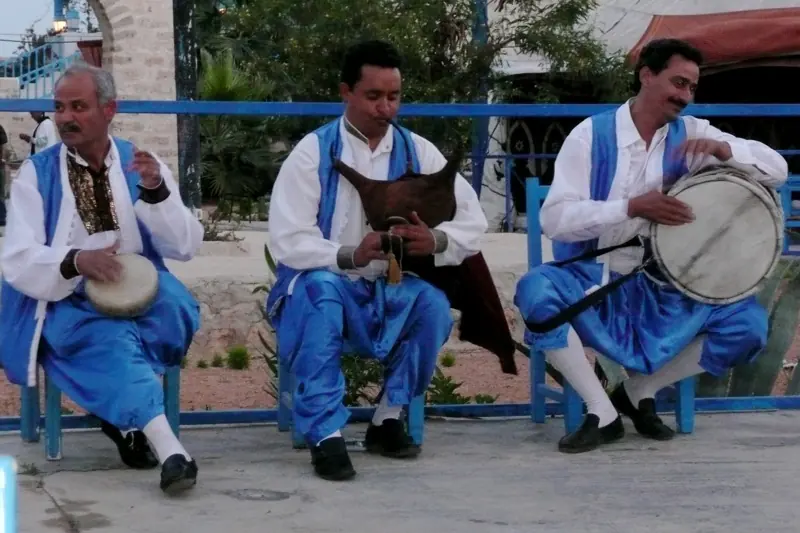
Wikipedia calls mezwed a genre of popular traditional music based on Tunisian scale rhythms. The instrument, the mezoued or mizwad, is a bagpipe whose bag is made of leather, and the genre is built around it together with the darbouka, a North African drum. It began as the music of the countryside and of working-class people, is usually sung in Tunisian and Libyan varieties of Arabic and is often played at weddings and parties. Themes are social, family and love. If a dinner show puts a bagpipe and drums on stage, this is probably the family of music it is borrowing from.
Salhi and other folk strands
The article also names salhi, another Tunisian genre known from 1931 recordings, which it says may be related to Berber music. It is a reminder that the country's sound has Berber, Arab, Andalusian and Ottoman layers, a mix that Tunisian cooking shares. No source consulted for this guide says a visitor show will include salhi, so mention it only as context.
Stambali: not a show
Wikipedia describes stambali, or stambeli, as a Tunisian music genre and a music-based therapeutic possession rite, practised mainly by Black Tunisians of slave descent. It uses the gumbri, a three-stringed plucked lute, and shqashiq metal clappers, and its ceremonies bring together music, dance and song, sometimes with trance. Its roots lie among Black populations from further south in Africa, with the first written evidence of the rituals dating to the 1700s. It is a living ritual with its own community, so a respectful visitor treats a staged imitation with caution and does not take it as the real thing.
What to listen for
At any live evening, the practical things to notice are the rhythm instruments, which carry the dance, the lead melody instrument and the way a singer's line is answered by the band. Applause and clapping along are normal at parties and weddings, which is the setting mezwed comes from. Do not expect a printed programme: the booking page for Hammamet's show lists none.
Who this isn't for
A ma'luf recital in a heritage hall, with seated and silent listening, is a different evening from a lively dinner show. Check what you are booking and where the emphasis lies before you commit.
Frequently asked questions
What is ma'luf?
Wikipedia describes it as a classical style rooted in Andalusia, built on the nuba suite, which lasts about an hour.
What is mezwed?
A popular genre built around a bagpipe, the mezoued, and the darbouka drum, often played at weddings and parties.
Will the Hammamet dinner show play these styles?
The booking page does not say, so none is promised here.
Sources